
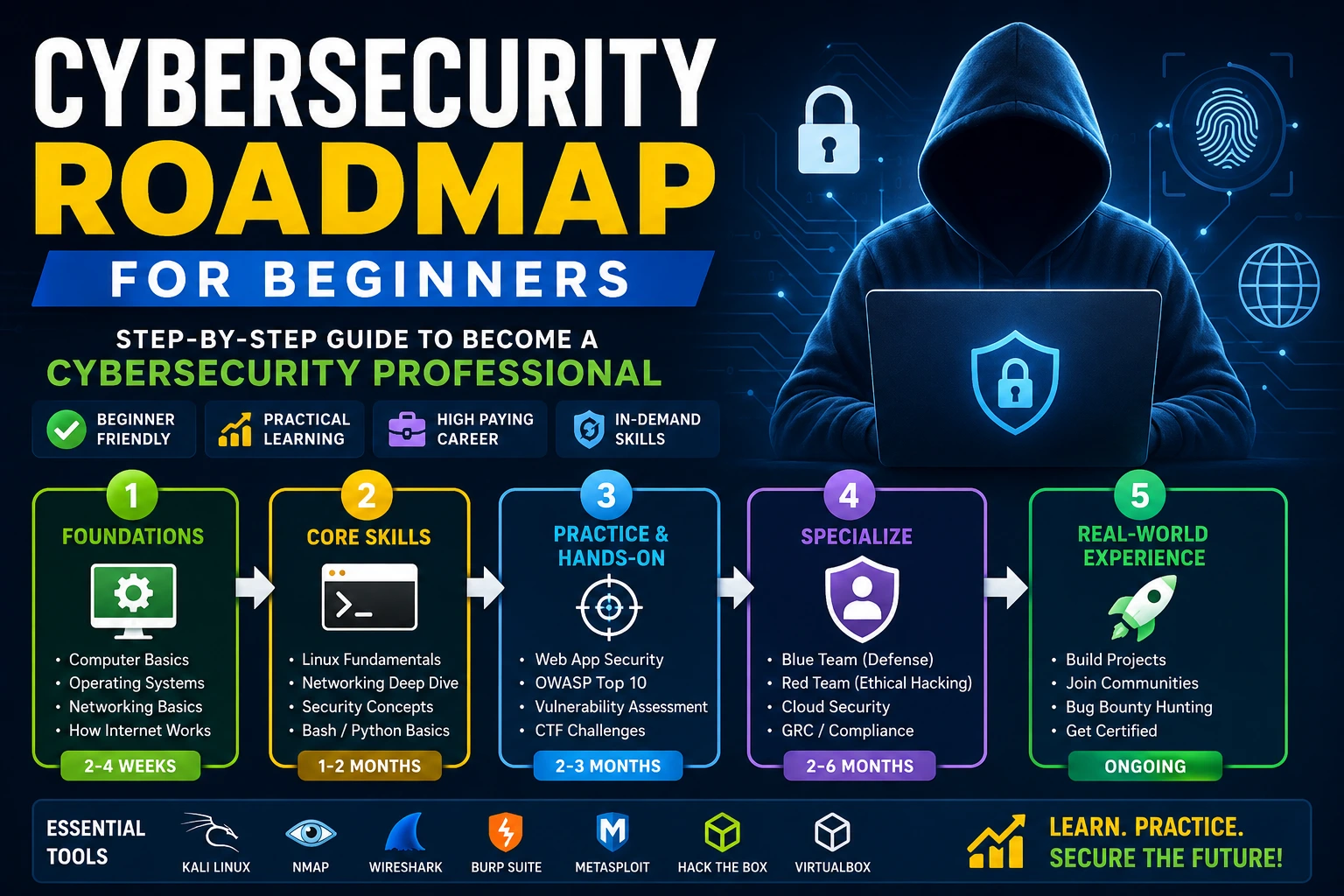
Cybersecurity Roadmap for Beginners 2026 : Cybersecurity is one of the fastest growing career fields in the world. Now a days increasing cyber attacks so companies are hiring skilled professionals for roles like Ethical Hacker, Security Analyst, Penetration Tester, SOC Analyst, Cloud Security Engineer, and Cybersecurity Consultant. If you are a beginner and want to learn cybersecurity from scratch, this roadmap will help you understand the complete learning path in a simple and practical way.
What is Cybersecurity?
Cybersecurity is the practice of protecting computers, servers, mobile devices, networks, and data from cyber threats and hacking attacks. It includes:
- Network Security
- Ethical Hacking
- Cloud Security
- Application Security
- Digital Forensics
- Threat Analysis
- Information Security
The demand for cybersecurity professionals is growing rapidly because businesses need protection from ransomware, phishing, malware, and data breaches.

Why Learn Cybersecurity in 2026 ?
Here are some major reasons why cybersecurity is a high-demand career:
| Benefit | Details |
| High Salary Jobs | Average salaries are very attractive worldwide |
| Remote Work Opportunities | Many cybersecurity jobs are work-from-home |
| High Demand | Companies urgently need skilled security professionals |
| No Degree Barrier | Skills matter more than degrees |
| Freelancing Opportunities | Bug bounty and penetration testing projects available |
| Career Growth | Multiple specialization options |
Step-by-Step Cybersecurity Roadmap for Beginners 2026
Stage 1: Learn the Foundations (2–4 Weeks)
Before learning ethical hacking, you must understand computer basics and networking fundamentals.
Topics to Learn
- Computer basics
- How the internet works
- Windows and Linux operating systems
- Networking concepts
- TCP/IP, DNS, HTTP, HTTPS
- Cybersecurity fundamentals
- CIA Triad (Confidentiality, Integrity, Availability)
Best Resources
- YouTube tutorials
- Google Cybersecurity Certificate
- TryHackMe Pre Security Path
- Wireshark basics
Important Networking Formula
Understanding network communication is essential in cybersecurity.
Although cybersecurity is not math-heavy initially, logical thinking and networking structure understanding are very important.
Stage 2: Learn Core Cybersecurity Skills (1–2 Months)
After learning basics, move to technical cybersecurity concepts.
Learn Linux Fundamentals
Linux is widely used in cybersecurity and ethical hacking.
Learn:
- Linux commands
- File permissions
- Bash scripting
- Terminal usage
Learn Networking Deeply
Understand:
- IP addresses
- Ports
- Protocols
- Firewalls
- VPNs
- Routing
Learn Programming Basics
Recommended languages:
- Python
- Bash
- JavaScript basics
High Demand Cybersecurity Tools
| Tool | Usage |
| Nmap | Network scanning |
| Wireshark | Packet analysis |
| Burp Suite | Web security testing |
| Metasploit | Exploitation framework |
| Gobuster | Directory brute force |
| John the Ripper | Password auditing |

Stage 3: Practice Ethical Hacking & Hands-On Labs (2–3 Months)
Practical experience is the key to becoming a cybersecurity expert.
Focus Areas
- Web Application Security
- OWASP Top 10
- Vulnerability Assessment
- Penetration Testing
- Capture The Flag (CTF)
- Exploitation Basics
Best Platforms for Practice
| Platform | Purpose |
| TryHackMe | Beginner-friendly labs |
| Hack The Box | Advanced hacking practice |
| OverTheWire | Linux and networking |
| PicoCTF | CTF challenges |
| PortSwigger Academy | Web security labs |
Stage 4: Choose a Cybersecurity Specialization
After learning the fundamentals, Cybersecurity Roadmap for Beginners 2026 choose your career path.
Popular Cybersecurity Career Paths
Blue Team
Defensive security roles:
- SOC Analyst
- Incident Response
- Threat Hunting
Red Team
Offensive security roles:
- Ethical Hacker
- Penetration Tester
- Red Team Operator
Cloud Security
Protect cloud infrastructure like:
- AWS Security
- Azure Security
- Google Cloud Security
Application Security
Focus on:
- Secure coding
- Web application testing
- API security
GRC & Compliance
Risk management and cybersecurity compliance roles.
Stage 5: Gain Real-World Experience
Build Projects
Create:
- Home labs
- Vulnerability scanners
- Security monitoring systems
Join Cybersecurity Communities
- Reddit cybersecurity groups
- Discord servers
- LinkedIn communities
- GitHub projects
Start Bug Bounty Hunting
You can earn money by finding security vulnerabilities in websites and applications.
Essential Cybersecurity Tools Cheat Sheet
| Tool | Category |
| Kali Linux | Penetration Testing OS |
| Nmap | Network Scanner |
| Wireshark | Packet Analyzer |
| Burp Suite | Web Security Testing |
| Metasploit | Exploitation Framework |
| VirtualBox | Virtualization |
| John the Ripper | Password Cracking |
| Gobuster | Directory Enumeration |
Best Certifications for Beginners
| Certification | Best For |
| Google Cybersecurity Certificate | Beginners |
| CompTIA Security+ | Security fundamentals |
| CEH | Ethical hacking |
| eJPT | Penetration testing |
| CISSP | Advanced professionals |
Cybersecurity Career Opportunities
Cybersecurity professionals are hired in:
- IT Companies
- Banks
- Government Organizations
- Cloud Companies
- Startups
- MNCs
Popular Job Roles
- Cybersecurity Analyst
- Ethical Hacker
- SOC Analyst
- Information Security Analyst
- Cloud Security Engineer
- Penetration Tester
Average Cybersecurity Salaries
| Role | Average Salary |
| SOC Analyst | High-paying entry-level role |
| Ethical Hacker | Excellent salary growth |
| Penetration Tester | Premium cybersecurity salary |
| Cloud Security Engineer | Very high demand |
| Security Consultant | High CPC technology niche |
Tips to Become Successful in Cybersecurity
- Practice daily
- Build hands-on projects
- Participate in CTF competitions
- Stay updated with cyber threats
- Learn continuously
- Create a GitHub portfolio
- Document your learning journey
Final Thoughts
Cybersecurity is one of the best technology careers for beginners and experienced professionals. With proper learning, consistent practice, and hands-on experience, anyone can build a successful career in ethical hacking and information security.
Start with the basics, practice regularly, choose a specialization, and build real-world projects. The cybersecurity industry offers excellent salary packages, remote jobs, freelancing opportunities, and long-term career growth.